Spring Anatomy: Suits And Tuxedos For Men

Spring dressing doesn’t mean sacrificing style or comfort. As the chill of winter fades and temperatures begin to rise, the modern man is presented with an opportunity to refine his wardrobe with lighter, breathable, and more expressive tailoring. With the right fabric, construction, and fit, you can navigate the season with confidence, elegance, and ease.
This guide breaks down the anatomy of spring suits and tuxedos : exploring the essential elements that define seasonal tailoring. From fabric selection to construction and fit, each component plays a crucial role in ensuring you look sharp while staying comfortable.
Fabric: The Foundation of a Spring Suit
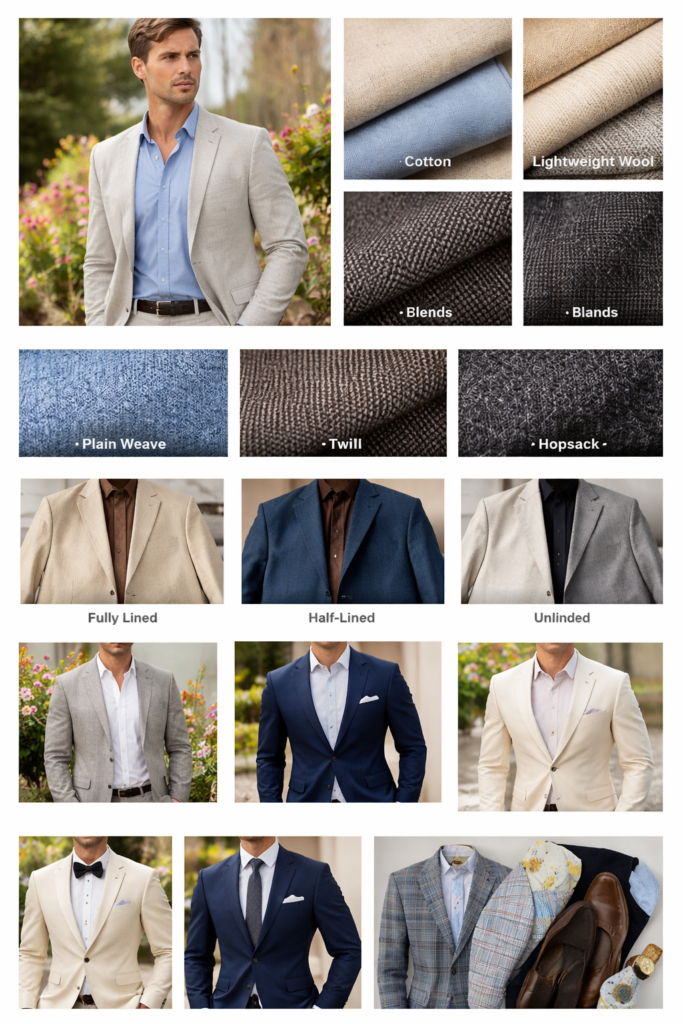
Spring tailoring begins with fabric. The goal is simple: maintain structure while introducing breathability and lightness.
A. Common Spring Suit Fabrics
Lightweight Wool
Wool isn’t just for winter. Lightweight variations such as tropical wool are excellent for spring. They are naturally breathable, wrinkle-resistant, and moisture-wicking,making them ideal for fluctuating temperatures.
Linen
Linen is a spring staple, loved for its airy, open weave. It allows maximum airflow, keeping you cool throughout the day. While it wrinkles easily, this relaxed texture is part of its seasonal charm.
Cotton
Cotton offers a softer and more structured alternative to linen. It’s breathable, comfortable, and less prone to wrinkling, making it perfect for both casual and semi-formal spring occasions.
Blends
Blended fabrics combine the best of multiple materials. Linen-cotton blends balance breathability with durability, while wool-silk blends add a subtle sheen and luxurious feel without compromising comfort.
B. Understanding Weaves and Texture
Plain Weave
A simple over-and-under construction that allows for good airflow. It’s lightweight and ideal for everyday spring wear.
Twill
Recognizable by its diagonal pattern, twill offers more durability while still maintaining breathability. It adds a slightly richer texture to spring suits.
Hop sack
A loose, basket-like weave that maximizes airflow. It’s one of the most breathable options available, though slightly more casual in appearance.
Thread Density
Lower thread density fabrics tend to be more breathable, making them better suited for spring. Higher density fabrics may feel smoother but can trap more heat.
Construction: The Blueprint for Comfort
The way a suit is built significantly impacts how it feels in spring weather. Lighter construction equals better comfort.
A. Suit Construction Types
Fully Lined
Traditional and structured, but less ideal for spring as it traps heat.
Half-Lined
A balanced option,offering structure while allowing better airflow through the back.
Unlined
The lightest and most breathable option. Perfect for relaxed spring styling, though it requires careful tailoring.
Canvas vs. Fused
Canvas construction provides a natural drape and superior breathability, adapting to your body over time. Fused construction is more affordable but less breathable and less durable.
B. Shoulder Construction
Heavy padding belongs to colder months. Spring favors softer shoulders with minimal structure, allowing the jacket to sit naturally and feel lighter on the body.
C. Tailoring Details for Spring
- Minimal padding in the chest and shoulders reduces bulk
- Breathable linings or partial linings enhance airflow
- Ventilated designs (such as side vents) improve movement and comfort
The Fit: Tailoring for Ease and Movement
Fit is always important,but in spring, comfort becomes just as critical as appearance.
A. Finding the Right Balance
Relaxed Tailoring
A slightly looser fit allows air to circulate, preventing the fabric from clinging in warmer conditions.
Modern Slim Fit
Still relevant, but should never feel restrictive. Lightweight fabrics and subtle adjustments ensure comfort without compromising style.

B. Sleeves and Trousers
- Slightly shorter sleeves allow airflow and show a hint of shirt cuff
- Trousers with a minimal break create a cleaner, lighter silhouette
- Avoid excessive stacking, which can trap heat
C. Personal Comfort Adjustments
Details make the difference:
- Functional cuff buttons for flexibility
- Cropped or ankle-length trousers for breathability
- Stretch-infused fabrics for ease of movement
Tuxedos in Spring: A Seasonal Shift in Formal wear
Tuxedos remain essential,but spring invites a lighter, more refined interpretation.
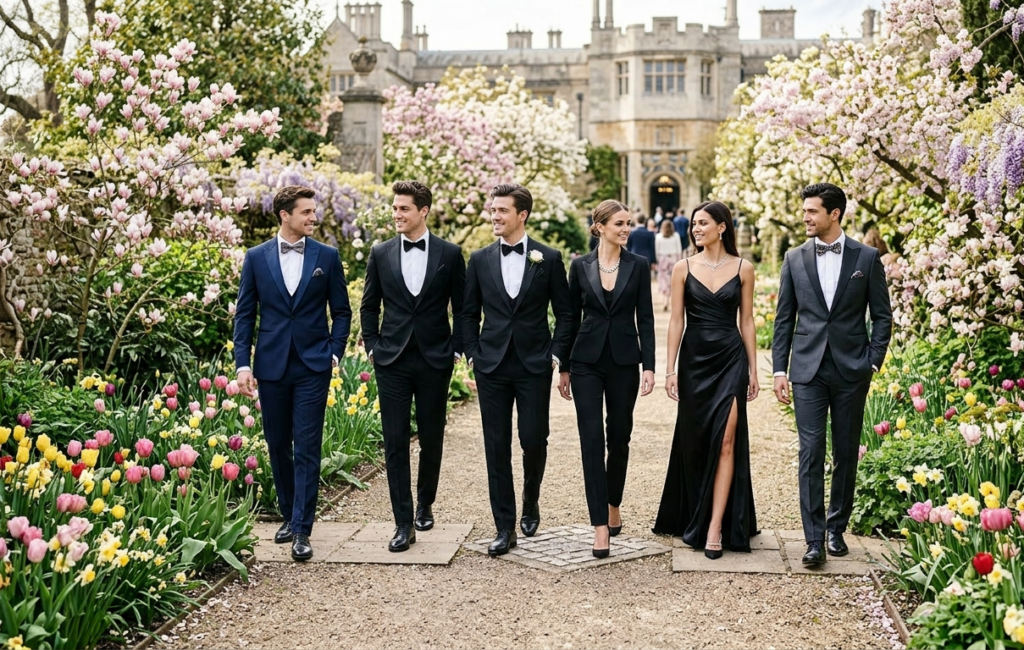
A. Fabric Choices
Opt for lightweight wool or blended fabrics instead of heavy traditional materials. Breathability is key, even in formal settings.
B. Color Evolution
While black remains timeless, spring opens the door to:
- Midnight blue
- Ivory or cream dinner jackets
- Soft, muted tones for evening events
C. Design Elements
- Shawl lapels for a sleek, modern look
- Peak lapels for classic elegance
- Reduced layering for a cleaner silhouette
Color and Pattern: Dressing for the Season
Spring is where tailoring becomes expressive.
A. The Seasonal Palette
Lighter colors do more than look good,they help regulate temperature by reflecting sunlight.
- Beige and cream for warmth and softness
- Light gray for versatility
- Sky blue and pastel tones for freshness
B. Pattern Play
Spring is the perfect time to experiment with subtle patterns:
- Windowpane checks for a modern edge
- Pinstripes for a refined touch
- Textured weaves for depth without heaviness
The key is balance,patterns should enhance, not overwhelm.
Accessories: Completing the Look
Accessories bring personality into spring tailoring.
- Ties & Bow Ties: Opt for lighter fabrics and softer colors
- Pocket Squares: Add contrast or a seasonal pop of color
- Footwear: Brown, tan, or suede shoes complement spring tones
- Belts & Watches: Keep them minimal and coordinated
Conclusion: Mastering Spring Tailoring
Building the perfect spring suit or tuxedo is all about balance,between structure and softness, tradition and modernity, style and comfort.
Focus on lightweight fabrics, breathable construction, and a fit that allows movement. With these elements in harmony, you’ll not only look refined but feel comfortable throughout the season.
Spring tailoring is effortless sophistication,light, fresh, and undeniably stylish.
Bonus: Spring Suit Care Essentials
To keep your suits in peak condition throughout the season:
- Dry Cleaning: Use sparingly to preserve fabric integrity
- Steaming: Ideal for removing wrinkles, especially in linen
- Storage: Use wide hangers and breathable garment bags
With proper care, your spring wardrobe will remain sharp, fresh, and ready for any occasion.
Ready to refine your spring style? The right suit isn’t just an outfit : it’s a statement of confidence, comfort, and timeless elegance.
well put together !
https://shorturl.fm/E7JrE
https://shorturl.fm/eGlMX