The Complete Business Suit Guide: Colour, Fabric, Fit, and Styling for the Modern Professional
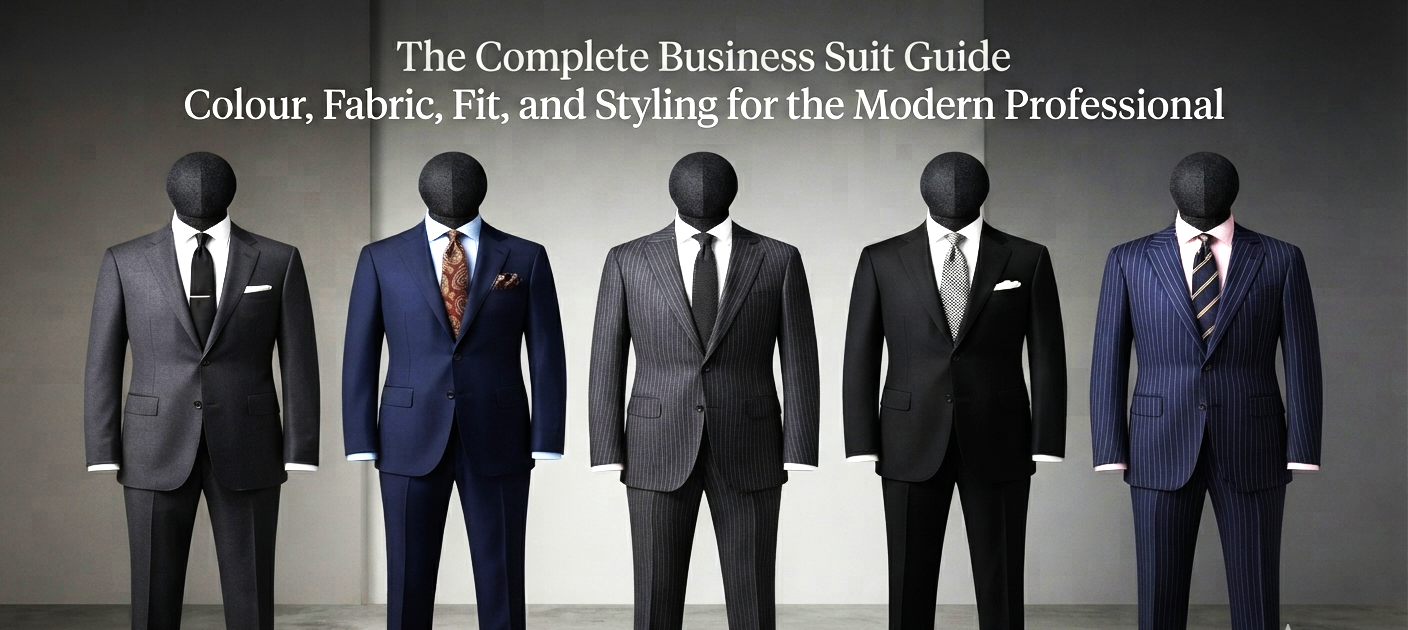
A business suit remains the cornerstone of professional menswear. In an era where dress codes continue to evolve and offices have grown more casual, a well-cut suit still communicates authority, discipline, and attention to detail more effectively than almost any other garment a man can put on.
The right suit influences perception before introductions are made. It shapes how colleagues, clients, recruiters, and decision-makers assess confidence, credibility, and professionalism often within the first seven seconds of a meeting. Whether walking into a boardroom presentation, meeting prospective clients, interviewing for a new position, or simply refining an office wardrobe, selecting the appropriate suit is as much a strategic decision as it is a stylistic one.
Not all suits carry the same presence. A navy suit projects confidence without appearing severe. Charcoal conveys authority and structure. Dark grey balances professionalism with modernity, while a subtle pinstripe introduces distinction within formal business environments. Beyond colour, the fabric weight, the construction of the jacket, and the precision of the fit determine whether a suit reads as considered tailoring or simply “a suit.”
Understanding when and how to wear each style and why it works allows a man to dress with purpose rather than habit. This guide explores business suit colours, fabric and construction, fit, the shirts and accessories that complete each look, and the specific combinations suited to interviews, client meetings, presentations, conferences, business travel, and everyday office wear.
What Defines a Business Suit?
A business suit is designed to communicate professionalism without drawing unnecessary attention to itself.
Unlike occasion wear, which often prioritises statement details, a business suit relies on clean lines, refined tailoring, and restrained colour palettes. Its role is to support the wearer rather than dominate the room.
The strongest business suits share several defining characteristics:
- Fit that is precise without appearing restrictive ; full range of motion through the shoulders and arms, no pulling across the back when buttoned.
- Fabric that drapes cleanly across the shoulders and chest rather than sitting stiffly or creasing within minutes of sitting down.
- Colour that remains understated ; navy, charcoal, and grey form the working core of any serious wardrobe.
- Details that are refined rather than decorative ; a clean lapel roll, a properly proportioned vent, buttons that sit flush.
A business suit should project competence, composure, and confidence. If the suit feels theatrical, trend-driven, or excessively formal for the room it’s worn in, it has moved away from its intended purpose. The goal is always to look like the most prepared person in the room, not the most dressed-up.
For most professionals, the strongest wardrobe is built around a small collection of reliable suits that perform consistently across interviews, presentations, meetings, conferences, and formal workplace environments rather than a large rotation of suits that each only work in one narrow context.
Fabric and Construction: The Foundation of Quality
Colour and cut get the most attention, but fabric and construction are what separate a suit that looks sharp on the hanger from one that performs for ten hours in the boardroom.
Wool quality. Most business suiting is rated by “Super” number (Super 100s, 120s, 150s), which refers to the fineness of the wool fibre. Super 100s–120s offers the best balance of durability and refinement for a suit worn several days a week. Higher numbers feel exceptionally soft but are more delicate and better suited to occasional wear.
Weight and season. A mid-weight wool (around 9–11oz) works year-round in most climates and air-conditioned offices. Lighter fresco or tropical wools (7oz and under) suit warmer climates and business travel; flannel and heavier worsteds suit colder regions and winter boardrooms.
Construction. Suits are generally built in three ways:
- Fused – interlining glued to the fabric. Most affordable, least forgiving over time.
- Half-canvassed – canvas through the chest, fused below. The standard for quality ready-to-wear and a sensible mid-tier investment.
- Fully canvassed – canvas runs the full front of the jacket, moulding to the body over time. The standard for bespoke and high-end tailoring, and what gives a suit its long-term drape and shape retention.
For a man investing in a small number of suits meant to last, half- or full-canvas construction in a Super 100s–130s wool is the most defensible long-term choice.
Fit: The Single Most Important Factor
No colour or fabric compensates for a poor fit. Three points decide whether a suit reads as tailored:
- Shoulder. The seam should sit exactly at the edge of the shoulder bone with no divots, no pulling, and no excess fabric. Shoulders cannot be altered easily this is the fit point to check first when buying off the rack.
- Drape through the body. The jacket should follow the line of the chest and waist without bunching when buttoned, and without being pinned so close that sitting or reaching becomes restrictive.
- Trouser break. A clean, modern silhouette typically uses a slight or no break at the shoe trousers that pool at the ankle date a suit faster than almost any other detail.
A single-breasted, two-button or three-roll-two jacket remains the most versatile cut for business environments. Double-breasted suits carry more formality and personality and suit men who want a more commanding silhouette, but they read as a deliberate style choice rather than a neutral default.
Navy Business Suit: The Foundation of Professional Dressing
Few garments offer the range and longevity of a navy business suit.
Navy occupies a unique position within menswear. It carries the authority required for interviews and corporate meetings while maintaining an approachable quality that makes it equally appropriate for daily office wear. This balance explains why navy remains the first recommendation for professionals building a business wardrobe.
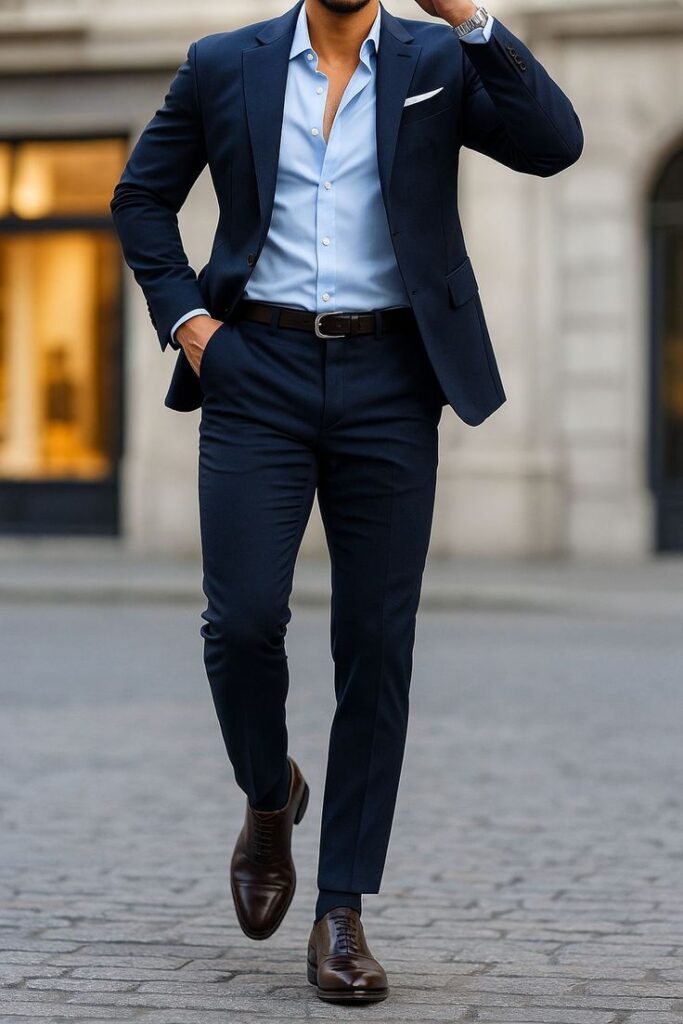
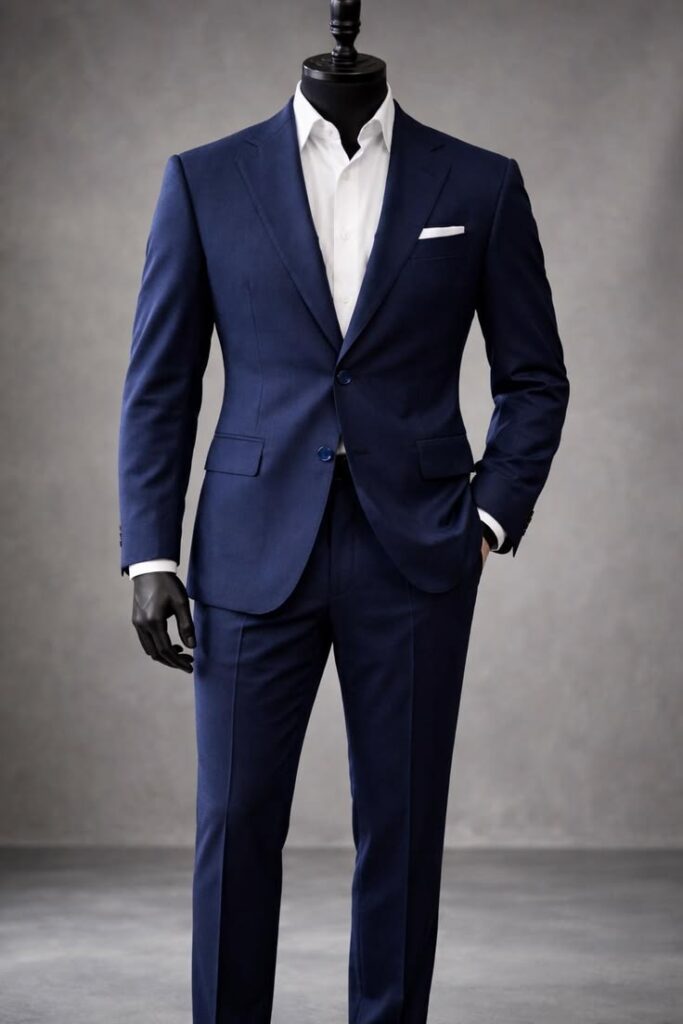
Shirt pairings. A navy suit paired with a crisp white shirt creates a sharp, confident appearance suitable for virtually every professional setting. Replacing the white shirt with light blue softens the look slightly while maintaining formality ideal for client meetings where a touch of approachability is useful. A fine white-on-white stripe shirt adds subtle texture for presentations without sacrificing polish.
Tie pairings. Burgundy, deep green, or navy-on-navy textured ties all work cleanly against navy cloth. Avoid black ties with navy, the combination tends to read as mismatched rather than deliberate.
Footwear. Brown Oxford or derby shoes introduce warmth and depth, and are the more contemporary choice. Black Oxfords create a more traditional, slightly more formal presentation, better suited to interviews and senior leadership meetings.
For interviews, presentations, conferences, and client meetings, few combinations rival the consistency of a well-tailored navy suit.
Charcoal Business Suit: Authority Without Excess
Charcoal occupies the most formal end of the traditional business colour spectrum.
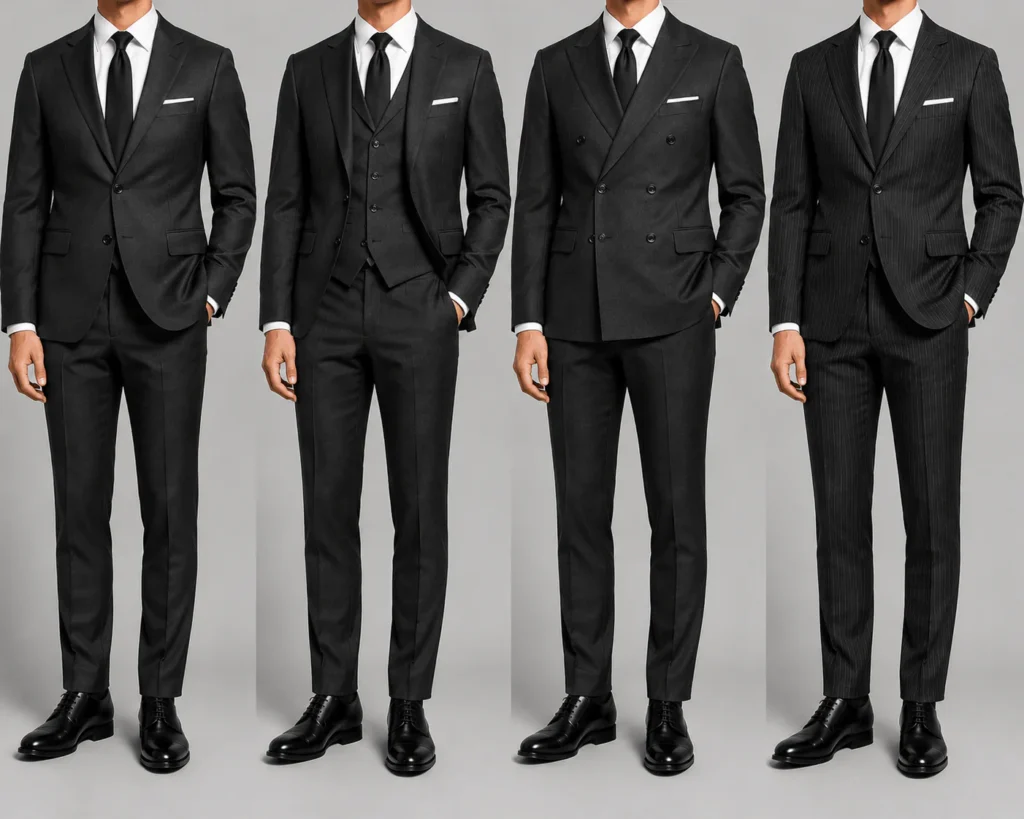
Darker than navy and more structured in appearance, charcoal conveys discipline, authority, and executive presence. It is particularly effective in industries where professionalism and trust carry significant weight ; law, finance, consulting, and corporate leadership have long favoured charcoal for exactly this reason.
Shirt pairings. A charcoal suit paired with a white dress shirt creates one of the sharpest combinations in professional menswear, and is the safest choice for high-stakes meetings. Light blue shirts provide subtle contrast while preserving formality. Pale grey shirts create a monochromatic, distinctly modern look for evening events or industries with a more design-forward culture.
Tie pairings. Charcoal carries jewel tones particularly well ; deep burgundy, navy, or forest green ties add colour without undermining the suit’s restraint.
Footwear. Black leather Oxford shoes complete the look with the level of refinement expected in boardrooms, presentations, and senior leadership meetings. This is not the pairing to experiment with brown.
For men seeking a suit capable of carrying them through high-stakes professional environments, charcoal remains one of the strongest investments available and is typically the second suit purchased after navy.
Dark Grey Business Suit: Modern Professionalism
Dark grey offers a contemporary alternative to navy and charcoal.
While maintaining the professionalism expected of business attire, dark grey introduces a softer visual presence that aligns naturally with modern workplace environments particularly tech, media, and design-led businesses where charcoal can occasionally feel too austere.
Its adaptability makes it particularly valuable within a professional wardrobe. It transitions seamlessly between meetings, office environments, networking events, and business lunches without feeling overly formal or overly casual.
Shirt pairings. Dark grey accommodates a wider range of shirt colours than almost any other suit colour. White and pale blue remain the safest choices for formal meetings; soft pink and subtle stripe patterns work well for client lunches, conferences, and less formal internal meetings.
Footwear. Both black and brown leather shoes work with dark grey, giving it more flexibility than charcoal. Burgundy or oxblood shoes are also a strong, slightly more distinctive pairing.
Professionals who already own a navy suit often find dark grey to be the logical second or third addition to their wardrobe, ahead of charcoal, in industries with a more relaxed dress culture.
Pinstripe Business Suit: Controlled Presence
A pinstripe suit carries a distinct sense of authority rooted in decades of professional tradition.
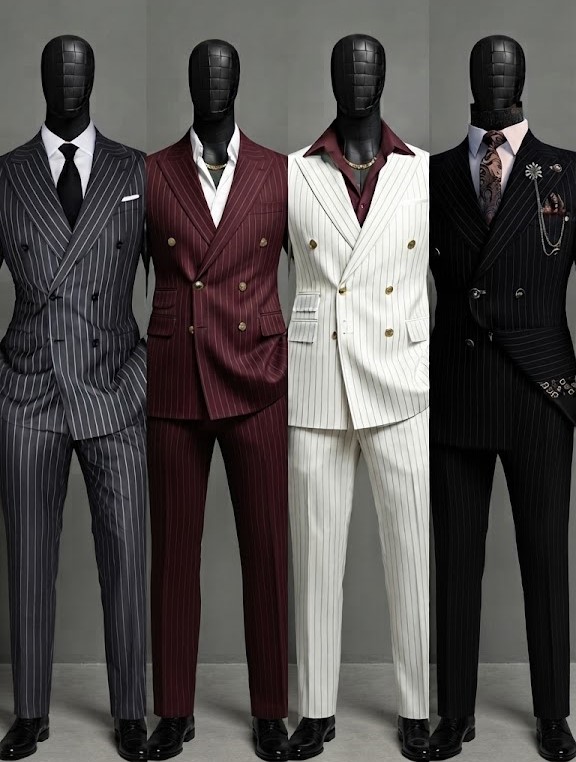
Historically associated with executives, financiers, and legal professionals, the pinstripe remains one of the few patterns capable of strengthening a business wardrobe without compromising professionalism.
The key lies in restraint.
A refined pinstripe introduces visual depth while preserving the seriousness expected within formal business environments. Wide or highly contrasted stripes can appear dated or theatrical. Fine, tonal, understated stripes maintain sophistication and keep the suit firmly in business rather than costume territory.
Because the suit already introduces pattern, the surrounding elements should remain clean and uncomplicated. A white or pale blue dress shirt, a dark solid silk tie, and polished black leather shoes provide the balance required for a sharp professional presentation. Patterned ties or busy shirts compete with the stripe rather than complementing it.
When tailored correctly, a pinstripe suit projects confidence, experience, and leadership without appearing forced. Best reserved for industries and seniority levels where its tradition will read as intentional rather than dated.
Beyond the Core Four: Seasonal and Travel Considerations
A wardrobe built only around heavyweight navy and charcoal wool will underperform in warmer climates or during frequent travel.
Warm-weather and travel suiting. A lighter-weight navy or grey in a fresco, tropical wool, or wool-blend with natural stretch holds a crease through long flights and back-to-back meetings far better than a heavier cloth, and breathes considerably better in hot climates or non-air-conditioned venues.
Wrinkle resistance for travel. Suits with a small percentage of synthetic fibre blended into the wool (typically under 10%) resist creasing significantly better when packed, without sacrificing the visual texture of wool. For business travel, this is a meaningful practical advantage over a 100% wool suit of the same colour.
Layering for cold climates. A slightly heavier flannel suit in charcoal or dark grey, worn with a fine merino layer beneath the shirt when needed, extends a business wardrobe cleanly into winter without requiring an entirely separate set of suits.
The Dress Shirt: The Foundation of Every Combination
The suit sets the tone, but the shirt determines how formal or approachable the final look reads.
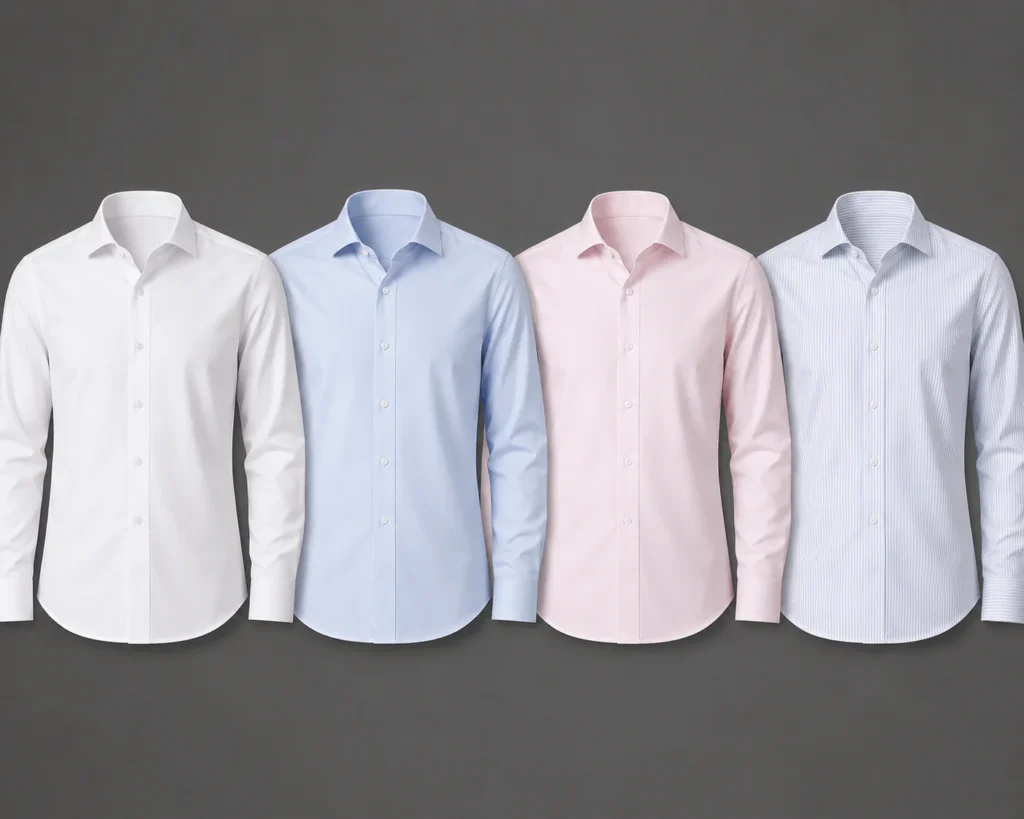
- White is the most formal, most versatile option and the correct default for interviews, first client meetings, and any setting where the stakes are highest.
- Light blue softens formality slightly while remaining fully appropriate for nearly every business context — the most useful “everyday” shirt colour.
- Subtle stripes (white-on-white, blue-on-white) add texture for presentations and conferences without reducing formality.
- Soft pastels (pale pink, soft lavender) work best with dark grey or navy in client-facing but less formal settings.
Collar choice matters as much as colour. A spread or semi-spread collar suits most face shapes and works cleanly with or without a tie increasingly relevant as more workplaces move toward open-collar business dress. A point collar reads slightly more traditional and pairs naturally with pinstripe and charcoal.
Ties, Pocket Squares, and Accessories
Accessories should reinforce a suit’s purpose, not compete with it.
- Ties. Solid or fine-textured silk ties in burgundy, navy, or forest green work across navy, charcoal, and grey suits. Reserve patterned or brightly coloured ties for lower-stakes internal meetings or industries with a more relaxed dress culture.
- Pocket squares. A white linen square in a simple fold adds polish for client meetings and presentations without appearing showy. Coloured or patterned squares are better suited to networking events than to first meetings or interviews.
- Belt and shoes. Leather colour should always match between belt and shoes. This is one of the most visible details and one of the most commonly overlooked.
- Watch. A slim leather-strap or metal dress watch is the only timepiece that reads as appropriate with a business suit; sports or oversized watches undercut an otherwise sharp look.
Building a Capsule Business Wardrobe
For most professionals, four suits rotated correctly outperform a larger collection of lower-quality pieces:
- Navy – the default for interviews, daily wear, and the majority of meetings.
- Charcoal – reserved for the highest-stakes presentations, board meetings, and senior leadership settings.
- Dark grey – daily rotation alongside navy, and the strongest option for client lunches and networking events.
- A travel-weight navy or grey – for business trips and warmer climates, extending the wardrobe without duplicating it.
A pinstripe suit becomes the logical fifth addition once the core four are established, for men in industries , law, finance, senior consulting where its tradition reads as an asset rather than a dated choice.
Three to four white and light blue shirts, two to three ties in the colours noted above, one black and one brown Oxford shoe, and a matching belt complete a wardrobe capable of covering every scenario below without requiring a single additional purchase.
Suiting for Specific Professional Scenarios
Interviews. Navy with a white shirt and a conservative tie is the safest, most consistently effective combination across industries. It signals preparedness without appearing as though you are trying too hard.
Client meetings. Navy or dark grey with a light blue shirt strikes the right balance of authority and approachability. Charcoal is appropriate for the first meeting with a particularly senior or formal client.
Presentations and boardroom settings. Charcoal with a white shirt commands the most visual authority at a distance and under fluorescent or stage lighting, where lighter colours can wash out.
Conferences. Dark grey or navy in a slightly lighter weight allows for long days on your feet without the suit losing its shape, while remaining sharp for any unplanned one-on-one meetings.
Business travel. A travel-weight navy or grey suit, paired with a wrinkle-resistant shirt, holds its shape through flights and back-to-back days better than a heavier cloth.
Everyday office wear. Dark grey or navy, worn slightly more relaxed open collar, no tie keeps a professional standard without appearing overdressed for a typical day at the desk.
Suit Care and Longevity
A well-made suit is a multi-year investment, and care affects its lifespan as much as initial quality.
- Rotate at least two to three suits through the week rather than wearing the same one daily wool needs time to recover its shape between wears.
- Hang on a contoured wooden hanger, never on a hook, to preserve the shoulder line.
- Steam rather than iron wherever possible, and dry clean sparingly over-cleaning breaks down wool fibres faster than wear does.
- Brush after each wear with a natural-bristle clothes brush to lift surface dust before it embeds in the fibre.
Frequently Asked Questions
What colour suit should every man own first? Navy. It carries the widest range across interviews, client meetings, and daily office wear of any single colour.
Is charcoal or navy more formal? Charcoal is generally considered the more formal of the two and is the stronger choice for board-level meetings, while navy is more versatile day to day.
How many business suits does a professional actually need? Three to four well-chosen suits typically navy, charcoal, and dark grey, plus a travel-weight option cover the vast majority of professional scenarios.
Can a pinstripe suit be worn for an interview? It can, but navy or charcoal remains the safer default unless the industry (law, finance) makes pinstripe a recognisable and expected signal of seniority.
What is the most important factor in how a suit looks , colour, fabric, or fit? Fit. A suit in the “right” colour but a poor fit will always look worse than a well-fitted suit in a less ideal colour.
Final Word
Professional style is rarely defined by novelty. It is defined by consistency, fit, and the ability to dress appropriately across a wide range of situations. A wardrobe built on navy, charcoal, and dark grey in well-constructed fabric, cut to a precise fit, and paired with the right shirts, ties, and shoes will outperform a larger, less considered collection in every meeting that matters.