The Only 3 Suits Every Man Needs: Navy, Charcoal, and Black
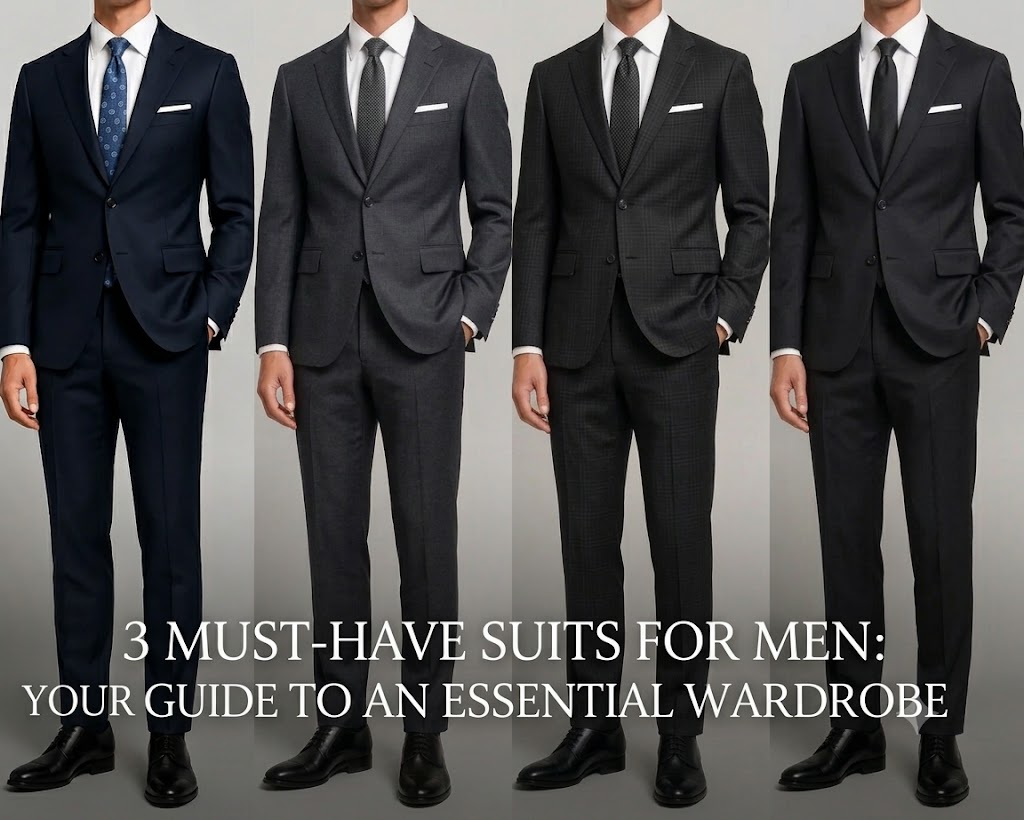
A well-built suit wardrobe isn’t about quantity. It’s about precision. Most men don’t need a closet full of suits. They need a small, intentional foundation that covers job interviews, office days, client meetings, boardroom presentations, and black-tie events without a single moment of hesitation.
Three suits are enough to build that foundation: navy, charcoal, and black. Each one plays a distinct role. Together, they form a complete system for modern professional dressing, one that removes guesswork and builds consistency into every outfit you put on.
Below, we break down exactly when to wear each suit, how to style it, and how to buy it right the first time.
1. The Navy Suit: Your Everyday Professional Standard
The navy suit is the most adaptable piece in modern menswear, and it’s where every suit wardrobe should start. It sits at the center of professional dressing because it performs in almost any environment without ever looking excessive or underdressed.
What a Navy Suit Communicates
Navy carries a controlled, quiet sense of authority. It’s darker and more serious than light blue, softer than black, and more adaptable across settings than charcoal. This balance lets a navy suit project competence without tipping into severity.
It’s a color closely tied to reliability, discipline, and composure, qualities that matter far more in a professional setting than trend-driven details. That’s exactly why navy remains a cornerstone of timeless menswear year after year.
How a Navy Suit Should Look
Here’s a stronger, more complete version of that section that covers the major navy suit variations without filler language:
How a Navy Suit Should Look
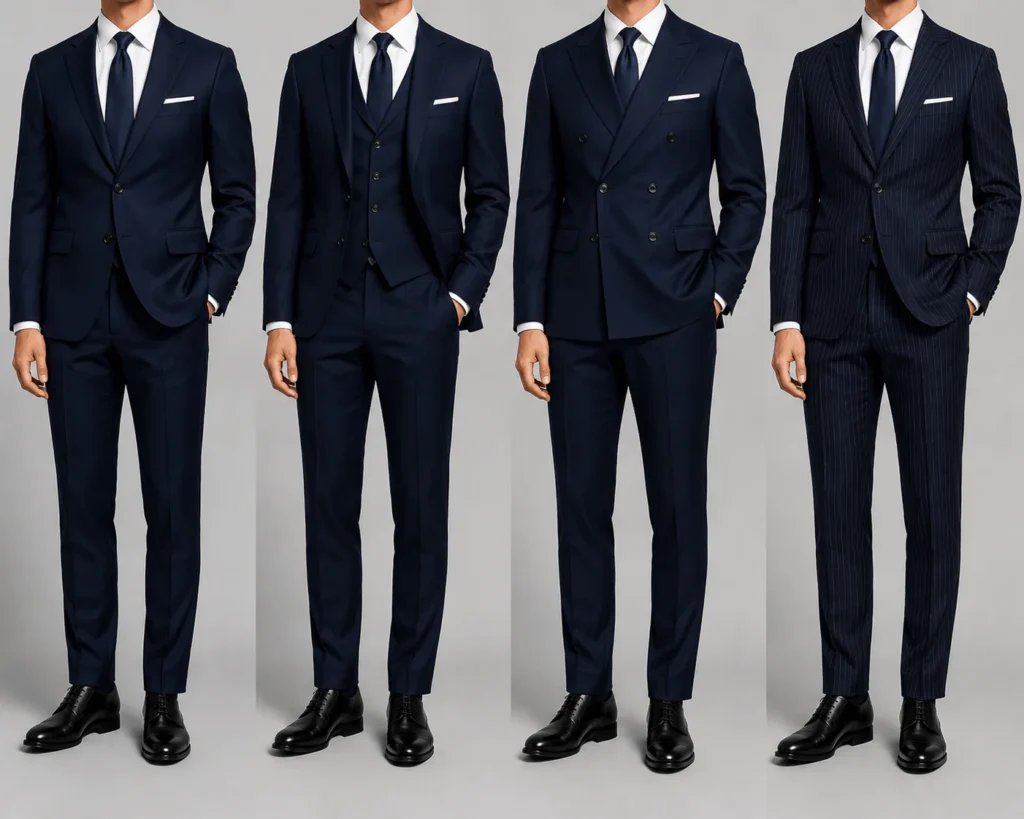
A navy suit comes in several distinct forms, each serving a different purpose while maintaining the same foundation of sophistication and versatility.
The most common is the two-piece suit, consisting of a matching jacket and trousers. It is the standard choice for business settings, formal occasions, and professional wardrobes. A well-tailored two-piece should follow the natural lines of the body, creating a sharp silhouette without restricting movement.
For a more elevated appearance, the three-piece suit adds a matching waistcoat. This extra layer introduces structure and depth, making it particularly effective for weddings, formal events, and occasions where a stronger sense of refinement is desired. Even with the jacket removed, the waistcoat preserves a polished look.
Navy suits are also defined by their jacket construction. A single-breasted navy suit features one column of buttons and a clean front profile. Its understated character makes it the most adaptable option, moving effortlessly between business, social, and formal environments.
A double-breasted navy suit offers a more commanding presence. With overlapping front panels and a broader visual frame, it creates a stronger silhouette that emphasizes the shoulders and chest. This style is often associated with executive dressing and classic tailoring traditions.
Pattern introduces another dimension. While solid navy remains the most versatile choice, a navy pinstripe suit adds visual interest through thin vertical stripes woven into the fabric. The pattern naturally elongates the body and conveys confidence without overwhelming the outfit. Pinstripes have long been associated with finance, law, and corporate leadership, though modern tailoring has made them equally relevant for contemporary professional wardrobes.
The shade itself changes with the light. Under artificial lighting, navy suit appears darker and more authoritative, often approaching the depth of midnight blue. In natural daylight, subtle blue undertones become more visible, giving the fabric greater dimension and a softer presence than black or charcoal. This ability to shift between formal authority and approachable elegance is one of the reasons navy remains a cornerstone of modern menswear.
When to Wear a Navy Suit
A navy suit is appropriate across nearly every professional context, including:
- Job interviews, where a strong first impression is critical
- Day-to-day corporate office environments
- Client meetings where trust and approachability matter
- Presentations that call for clarity and quiet confidence
- After-work networking events, where it transitions smoothly from boardroom to bar
It’s one of the rare suits that doesn’t require overthinking. If the occasion calls for professionalism, navy fits. Full stop.
Best Shirt Pairings for a Navy Suit
The navy suit is defined by contrast, and your shirt choice controls how formal or relaxed the entire look feels:
- White dress shirt: maximum clarity and the most formal option
- Light blue shirt: softens the look for daily office wear
- Pale pink shirt: adds subtle personality for modern, less rigid workplaces
A crisp collar and a structured fabric will always do more for the look than a bold pattern. The cleaner the shirt, the sharper the suit appears.
Best Shoe Pairings for a Navy Suit
Footwear changes the entire tone of a navy suit more than most men realize:
- Black Oxfords: push the look toward formal, corporate dressing
- Dark brown Oxfords: create warmth and a more modern balance
- Loafers: dial down the formality for creative or relaxed office settings
Whichever you choose, consistency in leather quality and polish is non-negotiable; navy tends to expose footwear quality faster than darker suits.
Navy Suit Fit Checklist
Even the most expensive navy fabric loses its impact if the fit is off. Look for:
- Shoulders that align exactly with your natural frame
- A jacket that closes without pulling at the button
- Sleeves that reveal a small portion of shirt cuff (about half an inch)
- Trousers that fall clean, without pooling fabric at the shoe
A properly tailored mid-range suit will always outperform an ill-fitting luxury one. If you only budget for one alteration, prioritize the shoulders; they can’t be corrected and define everything else.
Why Navy Is the First Suit Most Men Should Own
A navy suit earns its place as a wardrobe foundation because it adapts without effort. It never competes with the wearer or the room; it supports both. Worn repeatedly, it never looks repetitive, because shirt, tie, and shoe combinations can shift its personality every time you put it on.
Simple Navy Outfit Formula: Navy suit + white or light blue shirt + brown or black Oxfords + minimal accessories + a belt matching your shoe tone.
This combination stays relevant across industries because it avoids extremes, which is exactly the point.
2. The Black Suit: Reserved for Formal Occasions
A black suit is the most formal and visually intense option in classic menswear. It commands a strong, controlled presence, but it’s also the least flexible of the three for everyday business wear.
What a Black Suit Communicates
Black signals authority, discipline, and formality at the highest level. Its sharp, minimal aesthetic removes distraction and shifts all focus onto structure and silhouette.
In a professional setting, black tends to read as formal rather than approachable, which is exactly why it’s typically reserved for specific occasions rather than daily rotation.
How a Black Suit Should Look
How a Black Suit Should Look
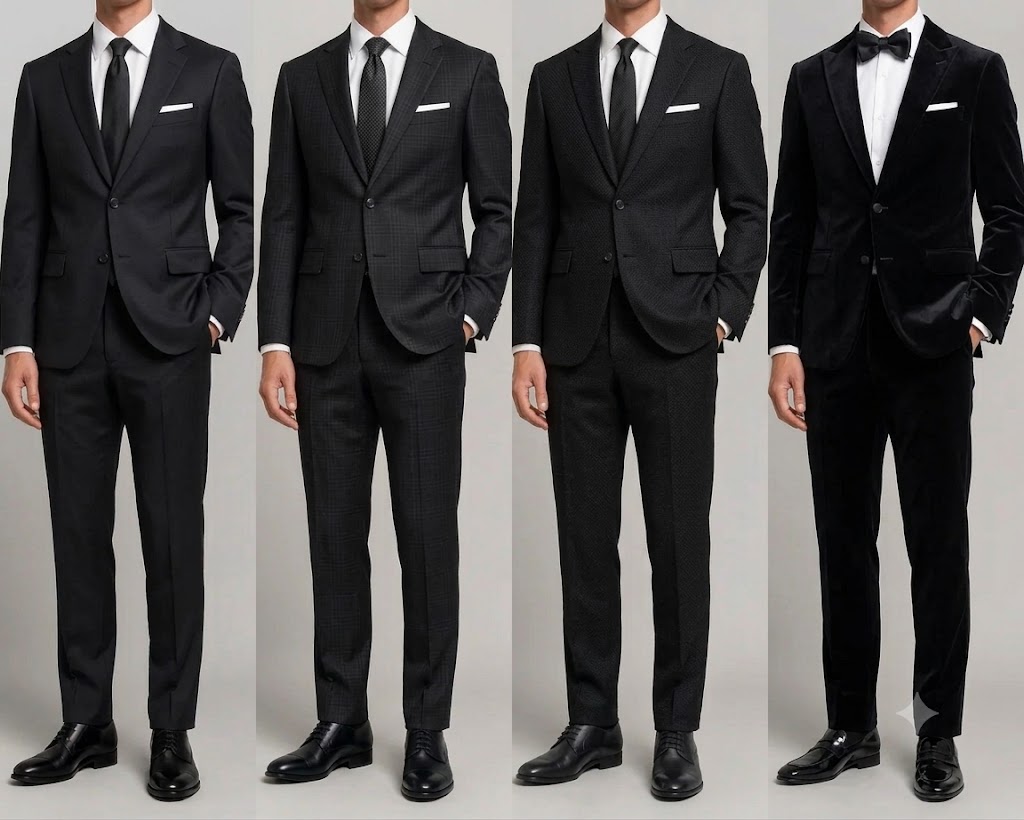
A black suit is defined by its clean lines, sharp contrast, and unmistakable formality. While navy and charcoal are often preferred for everyday business wear, black occupies a unique position as the most formal suit color in a man’s wardrobe.
The classic two-piece black suit consists of a matching jacket and trousers cut from the same fabric. Precision is essential. Because black naturally highlights the silhouette, proper tailoring becomes especially important. The jacket should sit cleanly across the shoulders, while the trousers should fall smoothly without excess fabric or bunching.
For occasions that demand greater refinement, the three-piece black suit introduces a matching waistcoat. The additional layer creates a more structured appearance and elevates the overall presentation. This style is particularly suited to black-tie-adjacent events, evening receptions, formal ceremonies, and weddings.
A single-breasted black suit delivers the cleanest expression of the color. Its streamlined front and balanced proportions make it the most versatile black suit configuration. Paired with a crisp white shirt and polished dress shoes, it creates a timeless look that never feels dated.
A double-breasted black suit offers greater visual impact. The overlapping front panels and wider lapel structure create a powerful silhouette that commands attention. When tailored correctly, it projects confidence, authority, and a strong sense of personal style.
While solid black remains the standard, patterned variations provide additional character. A black pinstripe suit introduces subtle vertical lines that add texture and depth without compromising formality. The pattern creates a longer, leaner appearance while maintaining the suit’s sophisticated character. For those seeking a modern alternative, tonal stripes woven into the fabric offer visual interest that remains understated.
One of the defining characteristics of a black suit is how it responds to light. In low-light and evening settings, it appears exceptionally deep and rich, creating strong contrast against shirts, ties, and accessories. Under bright daylight, the fabric reveals greater texture and detail, though it retains a level of formality unmatched by most other suit colors.
The strength of a black suit lies in its simplicity. Free from distracting patterns or color variations, it relies on fit, fabric quality, and tailoring to make its statement. When cut well and styled correctly, few garments project the same level of confidence, elegance, and formal sophistication.
When to Wear a Black Suit
Black is rarely the right call for everyday corporate dressing. It performs best at:
- Formal business events and galas
- Evening corporate functions
- High-level presentations in strictly formal settings
- Executive dinners or award ceremonies
- Any occasion with a strict black-tie or formal dress code
In many workplaces, a black suit is considered too formal for daily office wear or even a standard interview. Save it for when the occasion truly calls for it.
Best Shirt Pairings for a Black Suit
Black relies on simplicity and contrast above all else:
- White dress shirt: the strongest, most traditional pairing, built for sharp contrast
- Black shirt: creates a monochromatic look, though it reduces formality and leans more fashion-forward
- Light grey shirt: softens the contrast slightly, though less common in strict business settings
Best Shoe Pairings for a Black Suit
Footwear needs to match the suit’s intensity:
- Black Oxfords: the standard, full-formality choice
- Black Derbies: work well in slightly less rigid formal settings
- Brown shoes: generally clash with black’s intensity and should be avoided in formal contexts
Black Suit Fit Checklist
Black amplifies silhouette, so fit issues become more visible than with any other suit color:
- Shoulders must sit precisely and aligned
- The jacket should close cleanly without pulling
- Trousers should fall straight with minimal break
- Fabric should avoid excess shine to preserve a professional finish
Strengths and Limitations of the Black Suit
Strengths:
- Strong, unmistakable formal presence
- Clean, minimal silhouette
- Performs exceptionally in evening or high-level settings
Limitations:
- Less versatile than navy or charcoal
- Can feel overly formal in everyday office environments
- Offers limited flexibility with shirts and accessories
A black suit is a statement of formality, not everyday professionalism. For most men, it earns its place as a secondary suit, not the foundation of the wardrobe.
3. The Charcoal Suit: The Authority Piece
The charcoal suit is the most authoritative piece in classic menswear. It sits just below black in formality, but in professional environments, it’s often the more powerful choice; it reads as grounded and credible rather than ceremonial.
What a Charcoal Suit Communicates
Charcoal projects seriousness without noise. It’s associated with structure, discipline, and decisive leadership. Where navy feels approachable, charcoal feels decisive, which is why it’s the dominant color in finance, law, consulting, government, and senior corporate roles, all industries where stability and judgment are the message.
Charcoal doesn’t try to stand out. It signals that the wearer is already in control of the room.
How a Charcoal Suit Should Look
How a Charcoal Suit Should Look
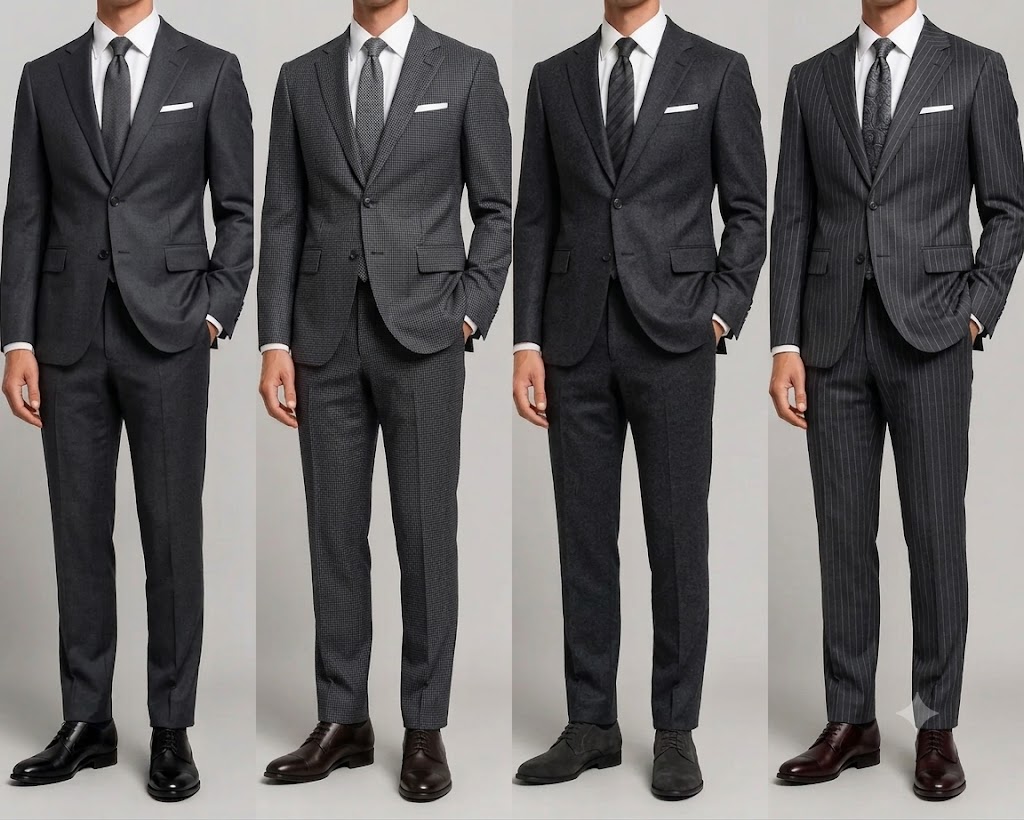
A charcoal suit occupies the space between navy and black, combining the authority of darker tailoring with a level of versatility few other suit colors can match. Its deep grey tone projects professionalism and confidence without the stark contrast associated with black.
The foundation of the charcoal suit is the two-piece configuration, consisting of a matching jacket and trousers. This version is a staple in professional wardrobes because it transitions effortlessly from boardrooms and client meetings to formal evening events. The jacket should follow the natural shape of the shoulders and chest, while the trousers should create a clean, uninterrupted line from waist to hem.
For occasions requiring additional polish, the three-piece charcoal suit introduces a matching waistcoat. The extra layer adds structure and visual depth, creating a more distinguished appearance while preserving the suit’s understated character. It is particularly effective for weddings, formal business functions, and events where a standard two-piece may feel too relaxed.
A single-breasted charcoal suit remains the most versatile option. Its clean front and balanced proportions allow it to pair effortlessly with a wide range of shirts, ties, and accessories. Whether styled conservatively or with contemporary touches, it maintains a composed and professional presence.
A double-breasted charcoal suit offers a stronger architectural silhouette. The overlapping front panels create greater visual weight through the torso and shoulders, resulting in a look that feels deliberate, authoritative, and exceptionally tailored. It is often favored by men seeking a more commanding interpretation of classic menswear.
Pattern can further enhance charcoal’s depth. A charcoal pinstripe suit introduces fine vertical lines that add dimension while subtly elongating the body. Unlike brighter patterns, pinstripes maintain the suit’s professional character, making them a popular choice in corporate, legal, and executive environments. Variations such as chalk stripes create a bolder statement while preserving the suit’s formal nature.
One of charcoal’s greatest strengths is its relationship with light. Under artificial lighting, the fabric appears darker and more powerful, often approaching the depth of black. In natural daylight, its grey undertones become more pronounced, revealing texture and dimension that black cannot achieve. This dynamic quality gives charcoal a sophisticated balance of authority and approachability.
The enduring appeal of a charcoal suit lies in its adaptability. Formal without feeling severe, professional without appearing predictable, and elegant without demanding attention, it remains one of the most dependable and versatile investments a man can make in his wardrobe.
When to Wear a Charcoal Suit
Charcoal performs best whenever credibility needs to be established immediately:
- Formal interviews in structured industries (finance, law, consulting)
- Boardroom meetings
- Leadership presentations
- Corporate negotiations
- High-level client discussions
- Professional events with strict dress standards
It’s especially effective in first impressions where decision-makers are in the room.
Why Charcoal Carries So Much Authority
Charcoal works because it removes distraction entirely. There’s no brightness, no softness, no visual competition with the wearer. That absence of noise shifts all attention to posture, presence, and communication, which is exactly why charcoal remains the go-to color in environments where outcomes hinge on perception and trust.
Best Shirt Pairings for a Charcoal Suit
Charcoal responds best to controlled, deliberate contrast:
- White dress shirt: maximum clarity and the most reliable, authoritative pairing
- Light blue shirt: introduces subtle variation while preserving structure, ideal for daytime meetings
Beyond these two, you start eroding the suit’s formality, so proceed with caution.
Best Shoe Pairings for a Charcoal Suit
- Black Oxfords: fully formal, boardroom-ready, the most traditional choice
- Dark brown leather shoes: introduce slight modern variation while staying appropriate in less rigid settings
- Lighter browns or casual footwear: reduce the suit’s authority and should be avoided in formal settings
Charcoal Suit Fit Checklist
Charcoal intensifies structure, so fit precision matters even more:
- Shoulders must sit exactly on your natural shoulder line
- The jacket must close smoothly, without strain
- Sleeves should show a controlled amount of shirt cuff
- Trousers should fall straight with a clean break
Charcoal Suit vs. Navy Suit: What’s the Real Difference?
The difference comes down to tone and intention:
- Navy communicates approachability and confidence
- Charcoal communicates authority and control
Navy is generally the better choice for everyday office environments. Charcoal earns its place when hierarchy, leadership, or high-stakes decision-making is involved. Many professionals rotate between both, choosing based on the room they’re walking into.
Common Charcoal Suit Mistakes to Avoid
- Over-dark accessories that make the outfit feel heavy
- Shiny fabrics that undercut professional credibility
- Poor fit, which exaggerates structure in unflattering ways
- Casual shirts that weaken the suit’s authority
- Worn or unpolished shoes that disrupt the entire look
Charcoal is unforgiving; it demands discipline in styling every time you wear it.
Quick Comparison: Navy vs. Charcoal vs. Black
| Suit | Best For | Formality Level | Shirt Pairings | Shoe Pairings |
|---|---|---|---|---|
| Navy | Daily office wear, interviews, client meetings, after-work events | Versatile / Medium-High | White, light blue, pale pink | Black or brown Oxfords, loafers |
| Charcoal | Boardrooms, leadership presentations, negotiations | High | White, light blue | Black Oxfords, dark brown leather |
| Black | Evening events, formal ceremonies, strict dress codes | Highest | White (classic), black (monochrome) | Black Oxfords or Derbies only |
How to Build Your 3-Suit Wardrobe (Buying Order)
If you’re starting from zero, build in this order:
- Navy first: it’s the most versatile and will get the most wear across the widest range of occasions.
- Charcoal second: once navy is covered, charcoal fills the gap for higher-stakes, leadership-driven settings.
- Black last: reserve this for when your calendar actually demands formalwear (weddings, galas, evening events).
Frequently Asked Questions
Is a navy suit too casual for an interview? No. A navy suit is considered appropriate and professional for the vast majority of job interviews, including corporate, creative, and client-facing roles. Pair it with a white shirt and black Oxfords for maximum formality.
Can I wear a black suit to the office every day? It’s not recommended. A black suit reads as highly formal and is generally reserved for evening events, galas, or strict formal occasions rather than daily office wear.
Which suit color is most versatile: navy, charcoal, or black? Navy is the most versatile of the three. It adapts to interviews, daily office wear, client meetings, and after-work events without feeling under- or overdressed.
Do I need all three suits: navy, charcoal, and black? For most professional men, yes. Each one fills a distinct role. Navy covers daily versatility, charcoal covers high-stakes authority, and black covers formal evening occasions. Together they eliminate nearly every wardrobe gap.
Should my navy suit shoes be black or brown? Both work. Black Oxfords lean more formal and corporate; brown Oxfords or loafers create a warmer, slightly more relaxed look. Choose based on the formality of the setting.
Final Word
None of these three suits is defined by fashion cycles. They’re defined by function. Navy solves the problem of looking composed and credible without overcomplication. Charcoal solves the problem of commanding a room. Black solves the problem of formal occasions where the dress code leaves no room for interpretation.
Together, they form the closest thing to a universal professional uniform in modern menswear, and the only suit wardrobe most men will ever need to build.